Newmix Coffee
A Korean invention, K-drama fame, and a reinvention.
Courtesy by Newmix
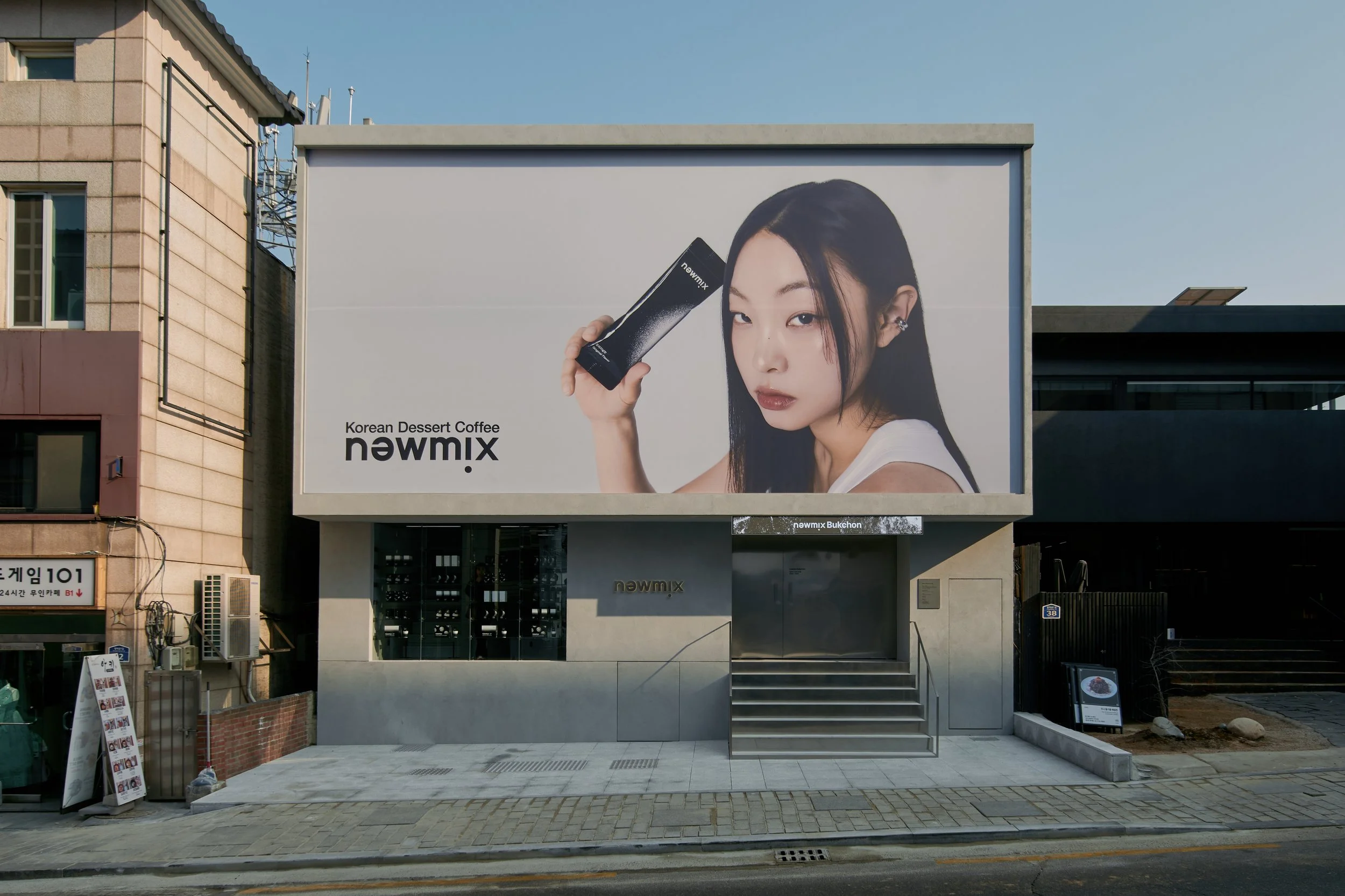
On a busy street in Anguk — famous for its Hanoks, traditional Korean houses, and popular with international tourists — Newmix hosts pour various coffee drink flavours to passersby. They stand in front of a shop that resembles a Seongsu fashion pop-up. Inside, square packages in different colours line up against a mirrored wall, with flavours such as Raspberry Matcha, Roasted Rice, Banana Milk, and a Bukchon-Special Yakwa.
Newmix was founded in 2024. The team wanted to update something very Korean in a contemporary format and explored various Korean drinks. However, older drinks like 식혜, shikhey, a sweet rice drink, and 수정과, sujeongwha, a cinnamon persimmon punch, were quickly ruled out. These drinks contain chunks and solids, making them hard to explain and serve to an international audience. During these talks, someone on the team suggested mix coffee—a Korean invention from the 70s.
“Who is drinking it? We don’t — so who’s buying it?” the team wondered. They realised it was a staple in places like hair salons and real estate offices. Thinking, “This is truly Korean,” they decided that Korean mix coffee would become a must-have gift from Korea.
“If Tokyo has tokyobike and Singapore Bacha Coffee, we want Seoul to have Newmix,” says Kim Kyurim, Creative Director at Newmix.
Instant coffee is nothing new: it was invented in Britain in 1771. The first mass-produced instant coffee powder appeared much later, when Japanese- American chemist Satori Kato developed it in 1901, with mass production starting in America around
“If Tokyo has tokyobanana and Singapore Bancha Coffee, we want Seoul to have Newmix.”
Decades later, during the Korean War in the early 1950s, American soldiers introduced plain instant coffee to Korea. It quickly gained popularity for its ease of preparation and low cost.
In 1976, Dongsuh Foods, under a licence from Maxwell House, took instant coffee further: it introduced the first 3-in-1 instant coffee mix. It contained powdered coffee, sugar, and powdered cream in a single-serve packet, in a 2-2-2 ratio.
“Because Koreans love the ‘ppalli-ppalli’ [hurry- hurry] culture, Koreans developed the idea of throwing coffee, cream and sugar all into one packet,” Kyurim says.
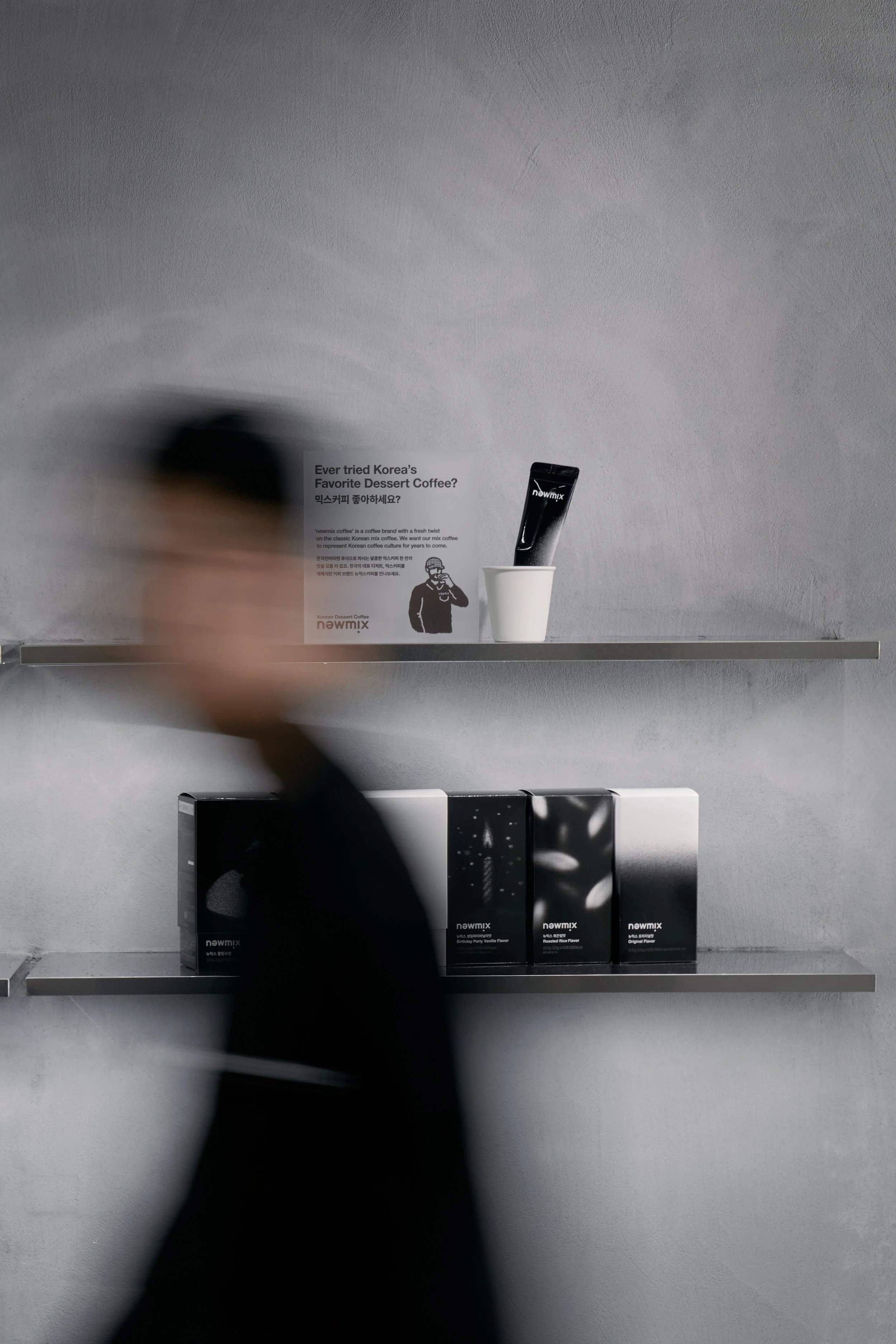
Maxwell House’s instant coffee mix quickly dominated, and by the decade’s end, Korea led the world in instant coffee consumption, with 75% of the population drinking it regularly.
Originally, the product was meant for outdoor activities. In the late 1990s, mix coffee became popular in offices as hot water dispensers became standard. This change accelerated after the 1997 financial crisis. Office staff were the first to be laid off during mass layoffs and suddenly, there was no one to make coffee for the remaining office workers, who now worked very long hours.
Speciality coffee was introduced to Korea in the early 2000s. By 2005, Seoul had around 800 coffee shops. In 2011, this number rose to 12,381. Growth continued through the next decade, and by 2019, South Korea ranked among the fastest-growing speciality coffee markets globally, recording 13% growth from the previous year. By 2022, the country had over 100,000 coffee shops, generating 15.5 trillion won and employing about 270,000 workers.
While speciality coffee boomed through the 2000s and 2010s, Dongsuh saw a 2-3% annual decline in mix coffee sales. In response, in 2011, it launched KANU, a premium instant line, and explored aroma recovery technologies that capture roasted-bean aromas and extract superior scents through low-temperature processing.
It took until 2024 for Dongsuh Foods to report another sales
increase. The uptick was attributed to inflation. A cup of Maxim Mocha Gold costs about 150 won, while speciality coffee in Seoul can cost 6-7000 won. Apart from economic reasons, K-drama and foreign tourism also played important roles. For example, instant coffee appears often in Moving (2023). Going back, in My Mister (2018), the lead, played by Lee Jieun, is shown having instant coffee after a tough day. In Vincenzo (2021), Song Joongki plays a consigliere from Italy who discovers and falls in love with a coffee mix in Korea. More recently, in Narco-Saints (2022), Kang Ingu played by Ha Jungwoo bribes a Suriname law enforcement chief with Korean instant coffee. Together, these scenes help reframe mix coffee as a luxury—so distinctively Korean and desirable that it works as a diplomatic gift in South America.
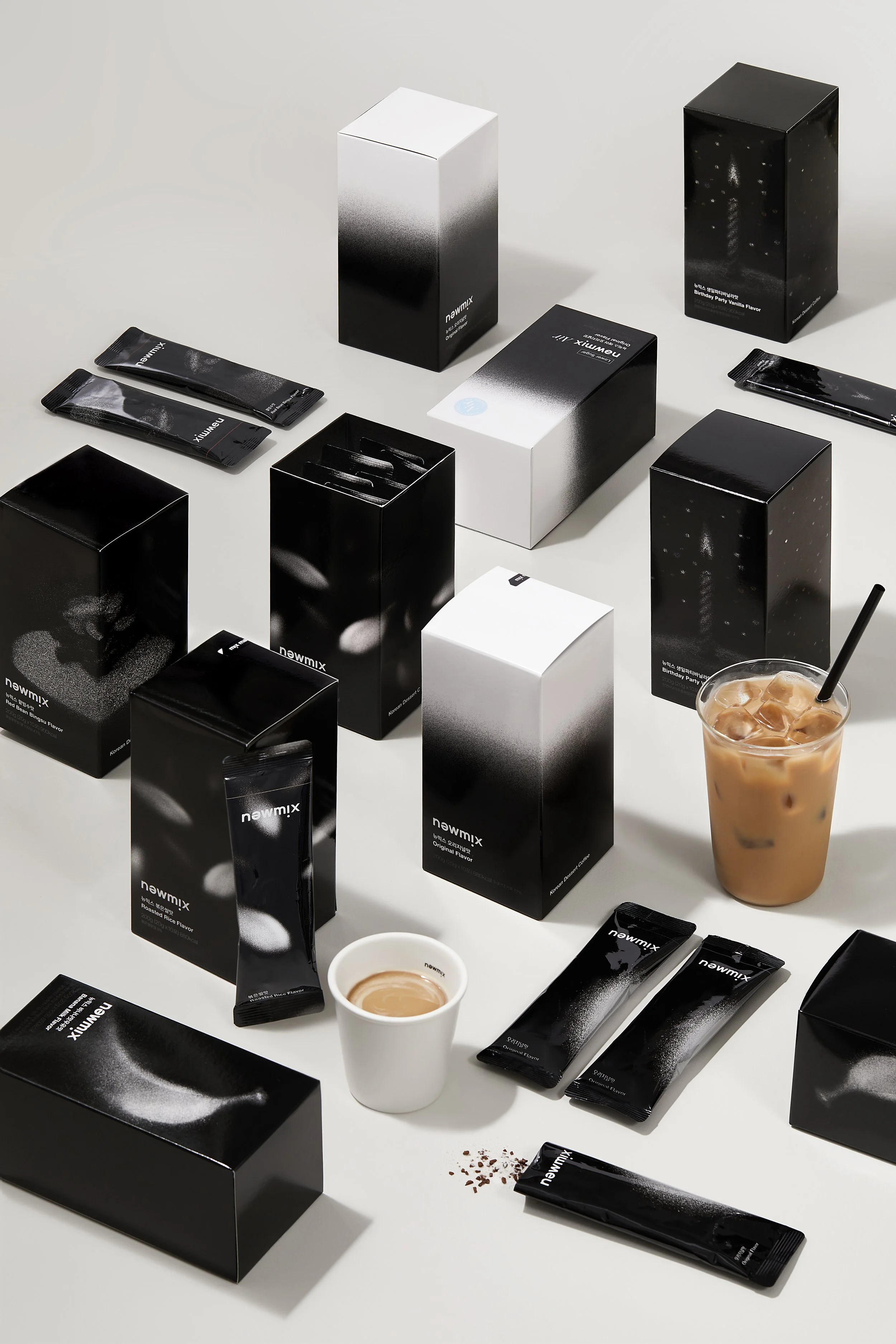
Despite speciality coffee’s dominance, Maxim Mocha sold 3.5 billion sticks last year. Mix coffee ranks first in Korea with over 13 billion cups; fresh coffee follows at 4.8 billion cups.
The inventor of mix coffee, Jo Pil-je, former vice chairman of Dongsuh Foods, passed away in April this year at the age of 101.
Newmix opened in Seongsu-dong in 2024, offering three distinct Korean flavours: original, roasted rice, and matcha latte. They soon opened second and third shops in Hannam and Anguk, adding more flavours. Today, they offer a dozen flavours, with additional seasonal and store-specific editions.
“Tourists who come to Korea seem to feel that things like banana milk and hazelnut coffee are very Korean.”
“We are always thinking about mixing: what if we mix this with that? What about raspberry and matcha together? Roasted chestnuts don’t usually go with coffee, but what if you try?” Kyurim says.
Newmix’s customers are mainly foreigners. Japanese buyers account for 40% of sales; Taiwanese buyers account for about 30%, followed by visitors from Singapore and the US.
The team noticed that their sense of what’s Korean differs from their foreign customers’ perceptions: “Tourists who come to Korea seem to feel that things like banana milk and hazelnut coffee are very Korean,” Kyurim says. “We don’t feel it ourselves, but foreigners seem to feel that it’s very Korean.”
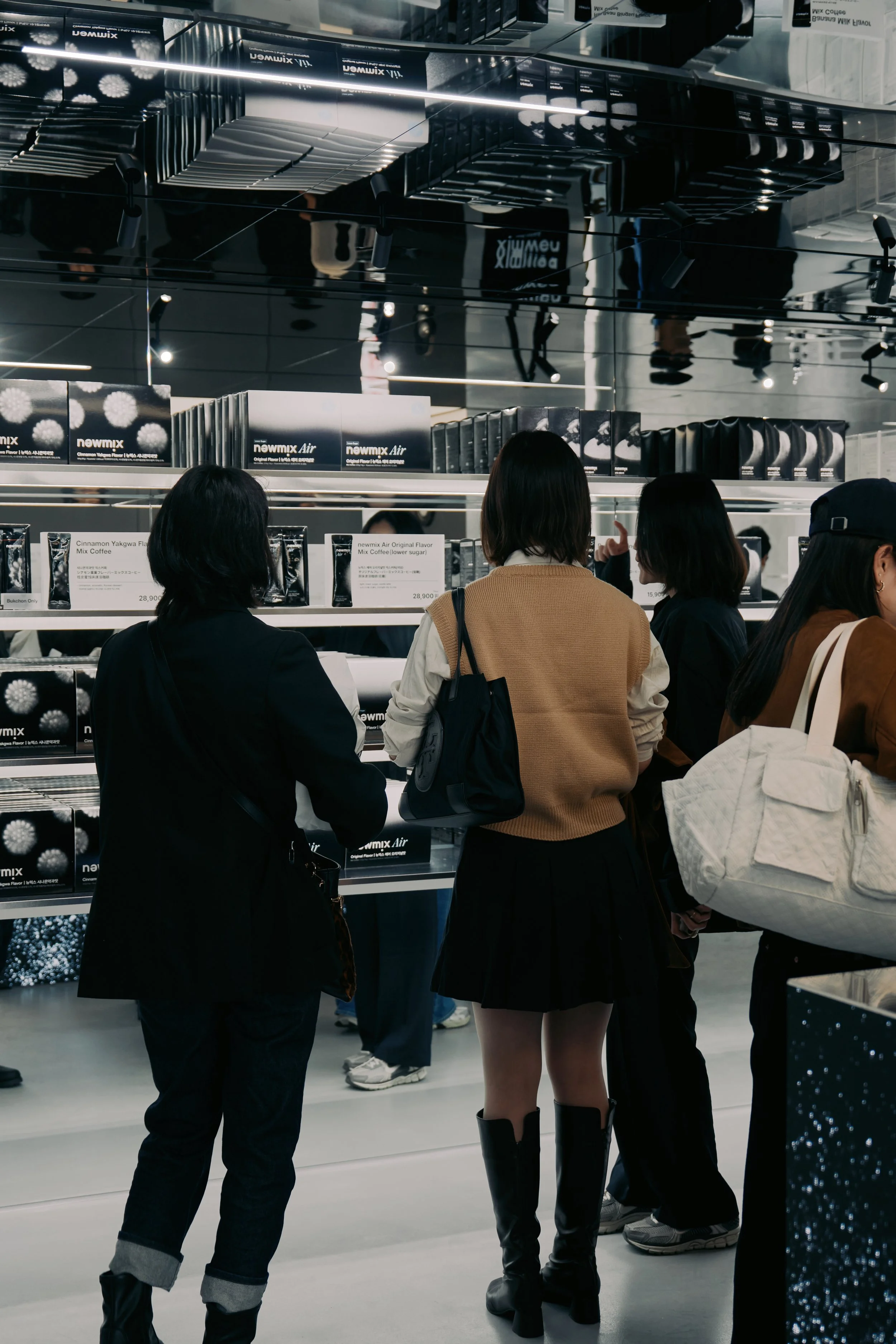
Newmix Seoul Stores
ANGUK / BUKCHON40, Changdeokgung 1-gil
SEONGSU3, Yeonmujang 3-gil
HANNAM16-1, Itaewon-ro 54-gil
MYEONGDONGOpening in 2026